INTRODUCTION:
ManooZ and I first met through mutual friends and a shared passion for house music. Hailing from Mannheim, he has spent more than two decades building a consistent path shaped by musical research, vinyl and studio work.
His latest EPs look back to the roots of Chicago house without slipping into nostalgia. They capture its raw energy and deep sensibility, filtered through a distinct personal vision. His work is a reminder that a musical identity is built over time, record by record—not through a polished profile and a few poses behind the decks.
In this interview, we talk about his influences, his analogue production approach and his collaboration with Robert Owens. Enjoy the read. Dax DJ
Con ManooZ ci siamo conosciuti grazie ad amici comuni e a una passione condivisa per la House music. Originario di Mannheim, da oltre vent’anni porta avanti un percorso coerente, costruito tra ricerca, vinile e studio. I suoi nuovi EP guardano alla Chicago House delle origini senza indulgere nella nostalgia: ne recuperano l’energia ruvida e la sensibilità deep, filtrandole attraverso una visione personale. Un lavoro che ricorda come un’identità musicale si costruisca nel tempo, disco dopo disco: non bastano un profilo curato e qualche posa in consolle per diventare parte della cultura club. In questa intervista parliamo delle sue influenze, della produzione analogica e della collaborazione con Robert Owens. Buona lettura. Dax DJ
Welcome to Family House! We’ve recently become friends through mutual friends – and, of course, a shared love of great music. You recently pointed me towards two fantastic new vinyl releases of yours, both rooted in Chicago house, which I was delighted to feature in Mixmag Italia. What inspired you to make music that revisits the raw sounds of Chicago’s formative years and the early days of deep house?
Hey, thanks for having me! Great to be doing this.
The desire to make these tracks came from inspiration and intention.
As a House head, I have nothing but love for the Oldschool, raw and jackin’ Chicago House era of the ’80s, as well as that ultra-deep, dreamy Larry Heard stuff.
I listen to all those Farley Jackmaster Funk records and old Trax or DJ International records, and at some point I told myself I wanted to make a record that sounded like a lost release from exactly that era, giving exactly the same energy and atmosphere.
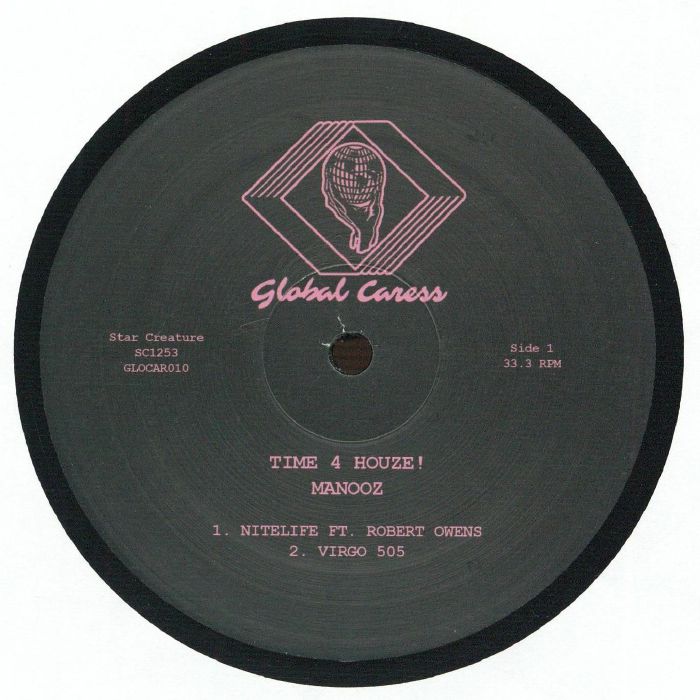
Your Time 4 Houze! EP was released on Star Creature’s Global Caress imprint, while Rhythm Of Motion is dropping on Quintessentials. How did your relationship with these two labels develop, and how do both EPs reflect different sides of your musical vision?
Tim from Star Creature is a great dude and what he and the team are doing with Global Caress is absolutely great. I reached out to him with these tracks and he loved them.
He was immediately down to put out the EP.
They reach a huge audience and everything they release is top quality.
After my Time 4 Houze! EP came out, Quintessentials hit me up and asked me for some new tracks. I’ve known the man behind the label for over ten years, and we have a great relationship.
We’ve released records together in the past, so I’m happy to be here on Quintessentials with the Rhythm of Motion EP.
I think both EPs show different sides of my sound, from the stripped-down, jackin’ stuff to the deeper, more melodic side.
But honestly, I’m producing other styles, too.
You teamed up with Chicago legend Robert Owens, who delivered atmospheric spoken-word vocals over an ’86-style jacker. How did this collaboration come together, and what did it mean to work with “the voice of house” himself?
I made the beat pretty quickly.
One day, after listening to a Lakuti mix, I felt inspired and thought, “Let me quickly try out some strings. Oh, that sounds nice. Let me add some typical 707 drums. Oh, nice, now just a bassline.“ Boom.
Around that time, someone sent me some vocals, and I found out they were from a Robert Owens sample pack. I put them on top of my track, and it sounded ace.
But since they came from a sample pack, I didn’t want to use them.
I showed the track to my friend Nico Lahs, and he encouraged me to get some original vocals from Robert.
Around the same time, I was in Rome talking to Maxi from Sounds Familiar and played him the track.
He liked it, too, but also encouraged me to get original vocals from Robert.
So I contacted Robert and explained the idea and my vision for the track.
He was down with it and recorded the vocals over my instrumental in his studio.
He nailed the vibe I was going for — straight-up ’87 Chicago style.
It feels special to have this legend’s voice on my own production.
Both EPs are packed with references to historical icons: Virgo 505 and Keep On pay homage to Virgo / Larry Heard and Ben Cernac, while Time 4 Houze! captures the raw spirit of Ron Hardy at the Music Box. How important is it for you to keep this historical lineage alive in your productions?
I wouldn’t say keeping that lineage alive is some kind of mission. It happens naturally, out of my love for this music and the fun I have making it. It’s enthusiasm.
Giving a track a name like “Virgo 505” is a way of paying homage to the legends, but it’s a wordplay, too.
What matters most to me is making music that feels authentic.
I think that’s why those references to the icons come naturally.
On Rhythm Of Motion, you also tip your hat to Steve Poindexter’s raw bleep style, Mode 6 brings spacey synth chords, and Silent Distance digs into LB Bad’s late-80s ultra-deep sound. What is your studio secret for capturing these distinct sonic signatures?
Keep it simple and dry.
I like to keep the recordings raw, with a bit of noise and the sound of the machines coming through.
I use a Boss BX-8 mixer from the ’80s, but the main thing is tweaking the synths until they sound right.
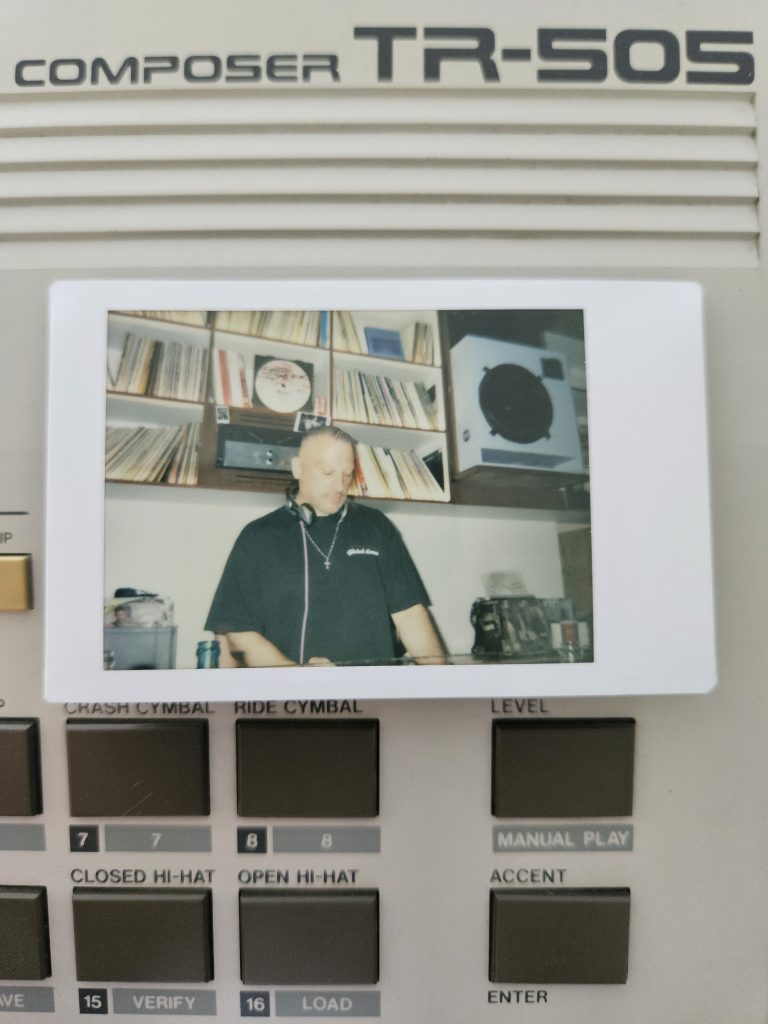
You are known for relying on hardware instruments that “hum, hiss, and breathe”. What specific drum machines and analog synths did you fire up in your studio to create the squelchy bass of Jack The Bass?
That bass came from my Yamaha DX100 with a bit of Plate Reverb.
I trimmed a few transients in the recording, to make it shorter and bouncier. For the drums, I sampled the 808 into the Teenage PO33, and resampled the drum sounds again.
That’s why they have that 8-bit sound.
These days, I am recording everything through the Boss BX-8 mixer and turn the input signal up to the red.
Hailing from Mannheim, your sound bridges jackin’ Chicago house with 90s NY, Paris, and Italian deep house—all anchored by your Hip-Hop upbringing. How does your Hip-Hop background influence your drum programming and groove?
Artists like RZA with his gritty production or The Alchemist with his grimy beats and little sparkling sounds on top have definitely influenced me.
I grew up with the golden era of ’90s Hip-Hop and I’m sure my music would sound completely different without that background.
The way I choose samples and shape vocals is still very much Hip-Hop-inspired.
That influence comes through in my music today too. For example the vocals on “Jack The Bass” are actually my own.
I guess that instinct to use my voice as part of the groove comes from those roots as well.
Another example of my Hip-Hop background is my track “Where’s Q-Tip At?”.
That track is even more Hip-Hop than House.
With over two decades in the game and releases on Chiwax, Housewax, Local Talk, Hudd Traxx, Beste Modus, and Selections, how has your studio philosophy evolved since your earlier ambient-deep releases like Juno Dreams, , which was inspired by Nu Groove Records?
Always moving, always learning new techniques and developing as an artist.
I’ve bought a few new machines since making the Juno Dreams EP, and you can hear that in my productions.
But that doesn’t mean I won’t make music like Juno Dreams anymore.
I’m still really into all that Nu Groove stuff.
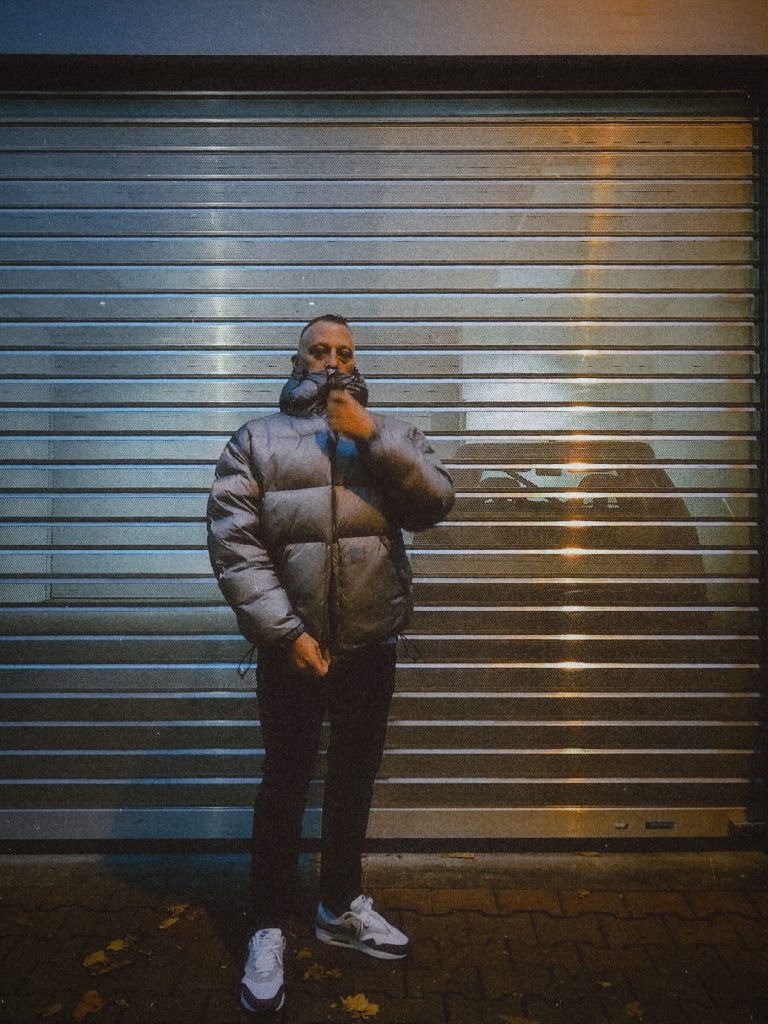
As a vinyl purist and dedicated crate digger, you’ve played clubs across Germany, France, Sweden, the Netherlands, and Spain. How do you select the records for your set when playing an underground basement club?
I think about who’s booked me, what kind of crowd I can expect and select a mix of records that I just recently bought, some sure-shots as well as some records that challenge me because I’ve never played them out before.
I like to move from Deep to Disco, from Jackin’ to Late-Nite.
It can be dubby or Boogie, Oldschool or a record I bought just a week ago.
You’ve also played a DJ set for Rinse FM in London. How does your mindset shift when performing an “on-air” radio set versus a club set? What does the near future hold for ManooZ?
Honestly, when I’m recording a radio mix, I’m even more nervous about playing than I am in a club.
I’m super critical of myself and don’t want any hiccups to be recorded forever.
I’ve got a bunch of new tracks in the works, so I’m sure there’ll be another release coming.
Also, I’m always up for bookings – I’d love to bring a dope House set to your city.
Link: